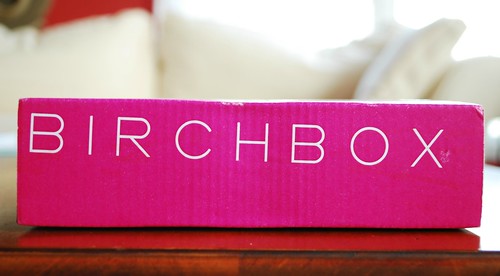
 |
| (free to use from: http://farm7.static.flickr.com/6209/6051700368_4385c3d613.jpg) |
"What is in one day is out the next", one could argue that this is the motto of the 21st century. In a time in which attention spans are at an all time low, due to people being bombarded with information wherever they look, a business model which can capture and retain a customer's attention is crucial.
The Problem:
Nowadays it seems almost as though there is a product to satisfy even the most obscure needs from sleeping bag suits to banana slicers to light-up eye lashes. In the beauty and fashion industry alone there are countless brands, products and websites. The choice of products is so overwhelming at times that I find I tend to stick to products that I already know and trust. This over-saturation of the market can lead to new products and especially smaller brands being ignored, causing them to fail before they even really have a chance to be discovered.
 |
| Sleeping Bag Suit; Free to use from https://upload.wikimedia.org/wikipedia/commons/2/28/Sleeping_bag_with_arms_and_legs.jpeg |
The Answer: The Birth of Birchbox
In 2010, Katia Beauchamp and Hayley Barna recognised that there was a gap in the online beauty market with only 2% of beauty products being bought online at the time (Hoshikawa,
2016; Plated, 2018). Aware of the fact that online shopping was becoming increasingly more popular, Beauchamp and Barna realised something needed to be done to encourage the sale of beauty products online, and so the idea of a monthly subscription box full of beauty samples, called Birchbox, was born.
The big idea: customers pay $10 a month to receive a personalised box with sample beauty products from different brands delivered directly to their doorstep, encouraging trial while eliminating the need for the consumer to filter through and research all possible options themselves. Katia Beauchamp stated that the main goal was never to just have a subscription box but to introduce customers to new products through the box while offering the service of enabling the customers to easily purchase any of the full sized products directly from their website. Although the idea was initially met with scepticism by investors (Plated, 2018), as they were not convinced that people would want to pay for sample products which are traditionally free, Birchbox co-founders managed to win them over after having conducted very successful beta tests which enabled them to gain concrete evidence of the costs and demands associated with the new product, while also gathering feedback (USPS/SBA, 2015).
Below is a short video with Katia Bauchamp, one of the co-founders of Birchbox explaining how Birchbox was born and the idea behind it.
Through their website they were able to digitalise and simplify the beauty products discovery and selection process for women worldwide. Due to the increased competition for Birchbox it is imperative that they keep trying to find new ways to stay relevant to the consumer and do not solely rely on their current digital business model, regardless of its success. Although they were pioneers in the beauty subscription box industry, they must now concentrate on evolving together with their customers.
In 2019, it was announced that Birchbox would continue to expand their business by partnering with Walgreens, who acquired a minority equity in the company (Schomer, 2019). A main reason for Birchbox's success is that they understood their customer's wants of being a passive actor in the beauty products discovery process while Birchbox would be the active participant. Keeping this in mind it was important for them to translate this to their new business venture with Walgreens. Birchbox plans to add build your own box (BYOB) bars to Walgreens stores all across America, making the products easily accessible to everyone. They will also be training employees to act as active consultants in the stores with the hopes of mimicking the success of their digital business model by taking the pressure off the consumer to make decisions themselves (Schomer, 2019). In doing this Birchbox will be merging their traditionally digital business model with non-digital elements, keeping the brand relevant both on-and offline.
 |
| (free to use from: https://c1.staticflickr.com/9/8255/8678673340_a8b90edcb7_b.jpg) |
The big idea: customers pay $10 a month to receive a personalised box with sample beauty products from different brands delivered directly to their doorstep, encouraging trial while eliminating the need for the consumer to filter through and research all possible options themselves. Katia Beauchamp stated that the main goal was never to just have a subscription box but to introduce customers to new products through the box while offering the service of enabling the customers to easily purchase any of the full sized products directly from their website. Although the idea was initially met with scepticism by investors (Plated, 2018), as they were not convinced that people would want to pay for sample products which are traditionally free, Birchbox co-founders managed to win them over after having conducted very successful beta tests which enabled them to gain concrete evidence of the costs and demands associated with the new product, while also gathering feedback (USPS/SBA, 2015).
Below is a short video with Katia Bauchamp, one of the co-founders of Birchbox explaining how Birchbox was born and the idea behind it.
https://www.youtube.com/watch?v=WARU1GxQnfo
The Business Model:
As already mentioned, although Birchbox is primarily known for its subscription box service, the website sells all full sized products of the sample products from the boxes, giving the customer the opportunity to easily and quickly acquire their favourite items. The way that Birchbox works is that the company partners with cosmetic brands such as Eyeko, Hugo Boss and BECCA who supply the company with the samples for the $10-subscription boxes. The box includes new products every month with the primary goal of attracting customers to the e-commerce store. Birchbox has come a long way from having its initial partnering with 20 brands and 1,200 subscribers in 2010 (Chhabra, 2015), to creating 100+ partnerships and having over 1 million subscribers to date (Perez, 2016; Birchbox.com, 2019). Originally launched in the USA, the business proved so successful that just two years later, Birchbox acquired JolieBox, a French subscription box brand, enabling them to go global by selling JolieBox in France, the UK, Spain and Belgium. Birchbox is now also being sold in the UK for 10GBP a month. Subscription based business models are nothing new, as they have been used by book publishers since the seventeenth century (Clapp, 1931), and have since been adopted by many other industries. Due to this Brichbox's digital business model cannot be considered fully transformational, which is when "digital technologies enable entirely new ways of conducting business that replace the established models" (Canvas, 2019). |
| Screenshot from Birchbox website: https://www.birchbox.co.uk/ |
Staying relevant
The subscription based business model proved so successful that other companies copied them, which resulted in trying times for Birchbox, causing them to layoff of 15% of staff in 2016 (Segran, 2018). If you were to google "subscription boxes" today, you would find one to suit any need from pet food to male shaving to stationary. In the cosmetic market alone there are many options from which to choose, ranging anywhere from less than 10 pounds a month (Latest in Beauty) to more luxurious options costing 50+ pounds per box (Mintd Box) (The Independent, 2018). Although Birchbox had a difficult 2016, they reported a record growth in 2017, having sold 1.5 million beauty boxes and increasing their net online shop sales by 84%. The dramatic cost-cuts through layoffs in 2016 enabled the company to invest more heavily in their mobile site, proving to be instrumental to their success since 75% of the brand's traffic in 2017 came from mobile users (The Retail Bulletin, 2018; O'Connor, 2017). When asked how Birchbox has managed to stay relevant while competition has exploded, Beauchamp credits the company's business model of an e-commerce store in addition to the subscription boxes to its success, stating that most of the competition does not offer this service (Chhabra, 2015).Through their website they were able to digitalise and simplify the beauty products discovery and selection process for women worldwide. Due to the increased competition for Birchbox it is imperative that they keep trying to find new ways to stay relevant to the consumer and do not solely rely on their current digital business model, regardless of its success. Although they were pioneers in the beauty subscription box industry, they must now concentrate on evolving together with their customers.
In 2019, it was announced that Birchbox would continue to expand their business by partnering with Walgreens, who acquired a minority equity in the company (Schomer, 2019). A main reason for Birchbox's success is that they understood their customer's wants of being a passive actor in the beauty products discovery process while Birchbox would be the active participant. Keeping this in mind it was important for them to translate this to their new business venture with Walgreens. Birchbox plans to add build your own box (BYOB) bars to Walgreens stores all across America, making the products easily accessible to everyone. They will also be training employees to act as active consultants in the stores with the hopes of mimicking the success of their digital business model by taking the pressure off the consumer to make decisions themselves (Schomer, 2019). In doing this Birchbox will be merging their traditionally digital business model with non-digital elements, keeping the brand relevant both on-and offline.
 |
| Screenshot from Walgreens website: https://www.walgreens.com/topic/brand/birchbox-partnership.jsp |
References:
Birchbox.com. (2019). Brands. Retrieved from https://www.birchbox.co.uk/brands
Canvas. (2019). Emerging Digital Business Models. Retrieved from https://exeteruni.instructure.com/courses/42/pages/emerging-digital-business-models?module_item_id=312
Schomer, S. (2019). How Birchbox CEO Katia Beauchamp Evolved Along With Her Brand. Entrepreneur Europe. Retrieved from https://www.entrepreneur.com/article/325660
Chhabra, E. (2015). Key To Success: Beauty Box Company Birchbox
Says It's Not Just About The Box. Retrieved from
https://www.forbes.com/sites/eshachhabra/2015/09/23/key-to-success-beauty-box-company-birchbox-says-its-not-just-about-the-box/#7fed31be6511
Clapp, S.L.C. (1931). The Beginnings of Subscription Publication in the Seventeenth Century. Modern Philology, 29(2), 199-224. Retrieved from https://0-www-jstor-org.lib.exeter.ac.uk/stable/pdf/433632.pdf?refreqid=excelsior%3A0c6e7e06bb0191df0dc0a41e3cf27ff8
Clapp, S.L.C. (1931). The Beginnings of Subscription Publication in the Seventeenth Century. Modern Philology, 29(2), 199-224. Retrieved from https://0-www-jstor-org.lib.exeter.ac.uk/stable/pdf/433632.pdf?refreqid=excelsior%3A0c6e7e06bb0191df0dc0a41e3cf27ff8
Hoshikawa, K. (2016). A Brief History of How Subscription Boxes
Changed The Way We Shop For Beauty Products. Retrieved from
https://fashionista.com/2016/08/beauty-subscription-boxes-history
O'Connor, C. (2017). Pioneering Beauty Startup Birchbox Turns Profit
After Tough 2016. Retrieved from
https://www.forbes.com/sites/clareoconnor/2017/04/12/pioneering-beauty-startup-birchbox-turns-profit-after-tough-2016/#adbd3cd6fd5c
Perez, S. (2016). Birchbox to launch a second, more personalized
beauty subscription service. Retrieved from
https://techcrunch.com/2017/02/13/birchbox-to-launch-a-second-more-personalized-beauty-subscription-service/
Plated. (2018, March 19). Toast and Talk with Birchbox's Katia Beauchamp [Video file]. Retrieved from https://www.youtube.com/watch?v=WARU1GxQnfo
Plated. (2018, March 19). Toast and Talk with Birchbox's Katia Beauchamp [Video file]. Retrieved from https://www.youtube.com/watch?v=WARU1GxQnfo
Segran, E. (2018). Here’s Why Nobody Wants To Buy Birchbox, Even
After VCs Spent $90M. Retrieved from https://www.fastcompany.com/40567670/heres-why-nobody-wants-to-buy-birchbox-even-after-vcs-spent-90m
The Independent. (2018). 9 best beauty subscription boxes.
Retrieved from
https://www.independent.co.uk/extras/indybest/fashion-beauty/beauty/best-beauty-subscription-boxes-a6897711.html
The Retail Bulletin. (2018). Birchbox enjoys record year for
growth. Retrieved from https://www.theretailbulletin.com/news/birchbox_enjoys_record_year_for_growth_08-01-18/
USPS/SBA. (2015, July 1). Hayley Barna and Katia Beauchamp, Co Founders of Birchbox on Growth [Video file]. Retrieved from https://www.youtube.com/watch?v=AeFDXl4G1hA
Hi Catherine, really enjoyed your blog post. Although not a subscription box user myself, you really highlighted the benefits of having one! I guess this explains to me now why so many companies like Dollar Shave Club etc. are utilising subscription services. Do you think the Birchbox model can succeed outside of beauty? With the likes of Spotify struggling to make a profit off their subscription services (https://slate.com/technology/2018/04/spotify-has-never-been-profitable-which-could-cause-it-trouble-after-its-ipo.html), I was wondering if that’s due to it being best used for beauty? Thanks Ina
ReplyDeleteHi Ina, that is a very interesting point you make! I think the reason it has worked for Birchbox is because of how people feel about beauty products. As mentioned, there are so many to choose from nowadays, an overwhelming amount, and there will always be more and more coming in the future. Due to this I think that the business model is a success, as Birchbox founder Katia mentioned, the box helps consumers be more passive than active in the beauty selection process, allowing them to try out new products without hassle. Everyone loves a new product, it's fun and exciting to try, but the process of acquisition can be anything but that, Birchbox manages to take away the hassle and only leave the customer with the enjoyable part. Plus, who doesn't love a little bit of surprise every month at their doorstep, the excitement alone would be enough to keep me purchasing the box.
Delete